
Sculptra
As we age, our skin gradually loses collagen, the essential protein that keeps it firm, smooth, and youthful. This happens as early as your mid-20s, and by your 30s and 40s, that decline becomes visible through volume loss, fine lines, and decreased skin elasticity.
Because collagen plays such a key role in how the skin looks, one of the most effective ways to maintain your skin’s youthfulness is to stimulate as much of your natural collagen as possible. In the era of GLP-1 medications, such as Ozempic, Wegovy, and Zepbound, more patients are experiencing significant weight loss, and with it, the facial volume loss commonly referred to as “Ozempic face.”
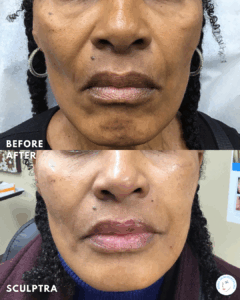
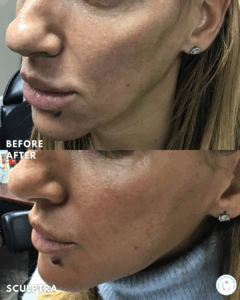
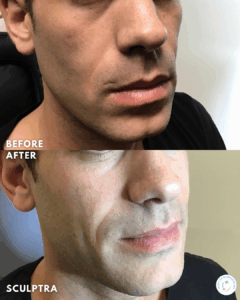
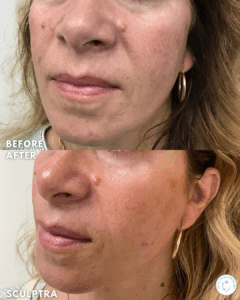
Sculptra is an excellent treatment option for restoring facial volume naturally by stimulating your own collagen and fat production. Rather than simply filling hollow areas, it gradually rebuilds the skin’s underlying support, helping to restore a youthful, refreshed appearance while maintaining natural-looking results.
What Is Sculptra?
Sculptra is a biostimulating injectable made with poly-L-lactic acid, also known as PLLA. Unlike hyaluronic acid fillers that add immediate volume, Sculptra works by stimulating collagen production. The changes develop over time, creating a refreshed appearance without an obvious or sudden transformation. By strategically placing Sculptra, we can achieve skin tightening and lifting.
Emerging Research: Sculptra and Fat Tissue
New research showed that Sculptra may do more than stimulate collagen. In a study of the hip-dip area, the treated side showed a 27% increase in the thickness of the natural fat layer after nine months. A newer tissue study also found more cells involved in maintaining and forming fat tissue within the Sculptra-treated area, which makes Sculptra a great post GLP-1 “Ozempic face” treatment!
How Many Vials of Sculptra Will I Need?
A commonly used guideline in aesthetic medicine is the “one vial per decade of life” approach:
- Patients in their 30s: approximately 3 vials
- Patients in their 40s: approximately 4 vials
- Patients in their 50s: approximately 5 vials
- Patients in their 60s: approximately 6 vials
This is a general starting guideline, not a fixed rule or guarantee.
The amount recommended may vary based on:
- Facial anatomy
- Degree of volume loss
- Skin thickness and quality
- Number of areas being treated
During your consultation, Dr. Olga will assess your facial structure and create a treatment plan based on the amount of correction you need.
How Long Does Sculptra Last?
Once your initial treatment series is complete, Sculptra results can last for up to two years. How long your results last will depend on factors such as your age and lifestyle. As the results gradually begin to fade, a maintenance treatment can help refresh the effect.
Sculptra Timeline: What to Expect
- Day 0: Treatment Day
Sculptra is injected into targeted areas using a fine needle or cannula. Immediately after treatment, the area may look temporarily fuller. This is primarily caused by the sterile water used to prepare the product, along with normal post-injection swelling This initial fullness decreases within several days as the water is absorbed and the swelling settles.
- Weeks 1–3
As the swelling subsides, the treated area may temporarily appear closer to how it looked before treatment. During this stage, Sculptra begins working beneath the surface to stimulate your natural collagen production.
- Weeks 4–8
Gradual improvements in skin texture, firmness, facial support, and volume begin to become more noticeable. This is also when many patients return for their next appointment as part of their personalized treatment series.
- Months 3–6
Results typically become more noticeable as collagen continues developing.
Patients may begin to see:
- Improved facial volume
- Smoother-looking skin
- Increased firmness
- A healthier, more refreshed glow
Depending on the number of sessions recommended, completing your full treatment series may take several months. Your results can continue developing even after your final appointment as your body produces more collagen.
What Areas Can Sculptra Treat?
- Cheeks
- Nasolabial folds
- Marionette lines
- Midface
- Temples
- Lower face
- Jawline
Sculptra may be used as part of a non-surgical buttock or hip-dip enhancement to fill in hip dips, add volume to the buttocks, and improve the appearance of indentations or dimpling. Results are more gradual and subtle than surgical augmentation, and multiple vials and treatment sessions may be needed to achieve the desired outcome.
Who May Not Be an Ideal Candidate for Sculptra?
Patients who already have significant facial fullness or do not need additional volume may not be ideal candidates for Sculptra.
Is There Downtime After Sculptra?
Sculptra generally requires minimal downtime, and many patients return to their normal routine shortly after treatment. Temporary side effects may include:
- Swelling
- Redness
- Tenderness
- Bruising
- Injection-site discomfort
- Bleeding
- Itching
- Temporary lumps or firmness
These effects are generally temporary and improve as the treated area heals.
Sculptra Aftercare
Following the correct aftercare instructions is an important part of your Sculptra treatment.
Patients are commonly instructed to follow the 5-5-5 massage rule:
- Massage the treated areas for five minutes
- Five times per day
- For five days
Massage helps evenly distribute the product throughout the treated area. Always follow the specific aftercare instructions provided by Dr. Olga at your appointment.
Frequently Asked Questions About Sculptra
Does Sculptra Look Natural?
Yes. Sculptra is known for creating natural-looking results. The goal is for you to look more refreshed and supported while still looking like yourself.
Can Sculptra Be Dissolved?
Unlike hyaluronic acid fillers, Sculptra cannot be dissolved with hyaluronidase. This is why proper treatment planning, placement, and conservative dosing are especially important.
Can Sculptra Be Used Under the Eyes?
Sculptra is not injected directly into the under-eye or periorbital area. This area may have an increased risk of developing small bumps or nodules.
Can Sculptra Be Injected Into the Lips?
Sculptra should not be injected into the red portion of the lips. Hyaluronic acid fillers or other treatments may be more appropriate for lip enhancement.
Can Sculptra Be Combined With Botox or Other Treatments?
Yes. Sculptra can be included in a treatment plan alongside Botox, hyaluronic acid fillers, energy-based devices, or other skin-quality treatments.
Can I Get a Facelift If I’ve Had Sculptra?
Yes. Having Sculptra does not mean you cannot have a facelift in the future. Some plastic surgeons prefer patients to avoid Sculptra before a planned facelift, because it can create changes within the tissue that may make the surgery slightly more difficult.
However, recent research looking at facelift patients with a history of Sculptra treatments found high patient satisfaction and no significant surgical complications attributed to their treatments.
Where Can I Get Sculptra in Brooklyn or Long Island?
Dr. Olga Zilberstein offers personalized Sculptra treatments at her Brooklyn, New York, and Long Island, New York, locations. Every treatment begins with a consultation to evaluate your facial structure, skin quality, degree of volume loss, and desired outcome.
Schedule a consultation with Dr. Olga Zilberstein to determine whether Sculptra is the right treatment for your skin and aesthetic goals.


